California · Local Post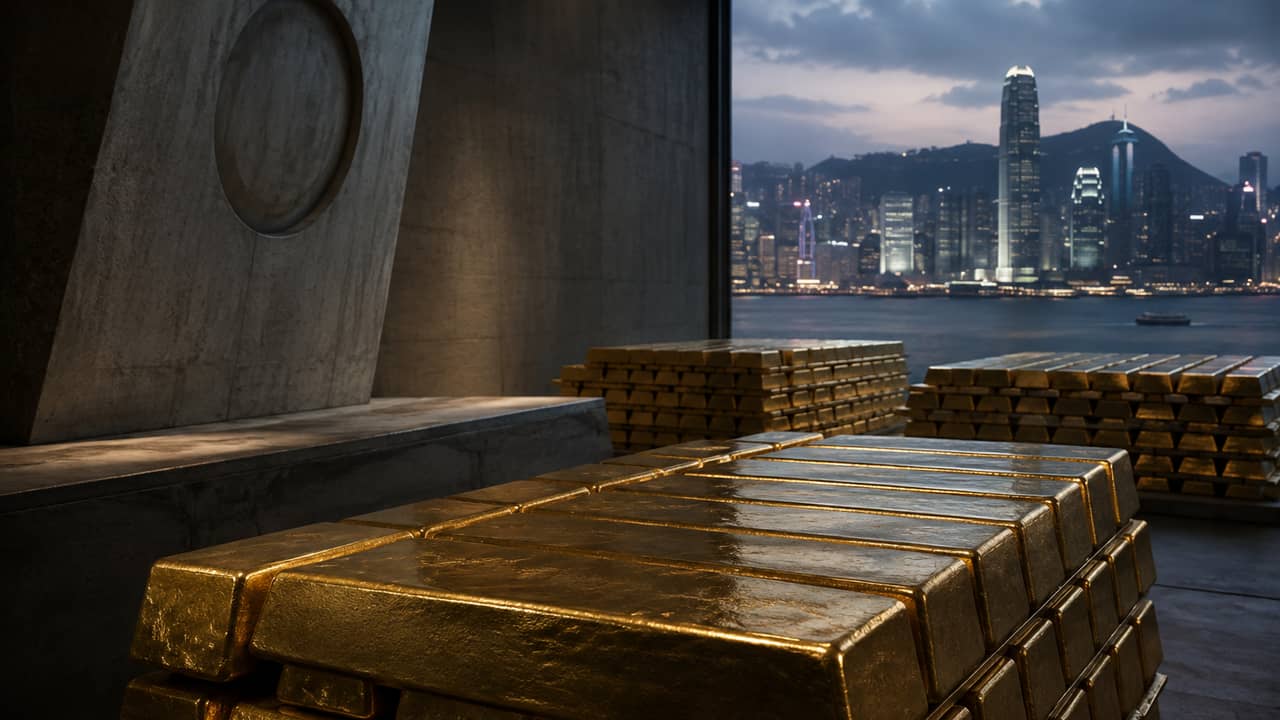
Hong Kong is no longer just a stop on Russia's gold route. It has become the route, with nearly 100 tonnes arriving in the first seven months of 2026 alone. If you want to see why sanctions often miss the thing they were built to hit, look at Hong Kong's gold trade.
Russian bullion shipments into the city reached nearly 100 tonnes in the first seven months of 2026, roughly triple the volume from the same period last year, according to the Financial Times. Since 2022, Hong Kong entities have bought about $35 billion of Russian gold. That is not a hidden trade.
It is sitting inside customs data, bank compliance files and shipping records, moving through a city that has not copied the US, UK or EU ban on Russian-origin gold. The metal lands in a financial center with fewer import barriers, then much of it moves on toward mainland China, the world's largest gold consumer and producer. The uncomfortable part is simple.
The system is working exactly as designed. Hong Kong's 2025 numbers already showed the shift. Russia shipped 92.1 tonnes of gold into the city last year, up 42% from 2024, worth HK$82 billion, or about $10.5 billion, according to Hong Kong government trade data reported by Interfax.
Chinese customs data showed mainland imports of Russian gold jumping 15-fold to $3.3 billion in 2025, with most of that volume landing in the fourth quarter. The Financial Times has now pushed the story forward. The 2026 surge means last year's record was not the peak.
The Dubai route lost its edge. This route did not appear from nowhere. Washington sanctioned Polyus, Russia's largest gold miner and the world's fourth-biggest, in 2023.
Russian producers first leaned harder on Dubai, which had spent years building itself into a major bullion hub. Then the paperwork got harder. The UAE was placed on the Financial Action Task Force's grey list in 2022 and came off it in 2024, but banks had already become more careful about transfers, cash payments, and the identity of buyers.
Hong Kong offered the cleaner trade route for Moscow's purposes. It is a free port, it has deep links to mainland China, and it sits inside a political structure where Beijing's priorities matter more than Washington's displeasure. As the Financial Times reported, China has been encouraging Hong Kong's rise as a bullion hub rather than trying to slow it down.
Sanctions can push trade away from London, New York, and Zurich, but they cannot make Russian gold disappear. The metal finds the next buyer, the next vault, and the next shipping lane. The US Treasury did try to hit the network.
In June 2024, it sanctioned Hong Kong and UAE firms tied to gold from Polyus, including Holden International Trading, Taube Precious HK, VPower Finance Security, and Red Coast Metals Trading. Reuters reported that Treasury said Holden and Taube routed payments, Red Coast obscured payments from Russian-origin gold sales, and VPower transported the metal. The London Bullion Market Association revoked VPower's membership the same day.
None of that stopped the flow. Hong Kong's 2025 Russian gold imports still climbed, and the first seven months of 2026 ran far above the same period a year earlier. Radio Free Asia later reported that VPower disappeared from Hong Kong's list of licensed security firms after the US sanctions, while another company, Horsemart Services, emerged with overlapping ties and government contracts.
This is where the whack-a-mole problem becomes obvious. You can sanction a transporter, a payment company, but when the destination itself keeps the trade open, the route survives. Gold's rally has made that route more valuable.
The World Gold Council said gold posted a 67% return in 2025, while the LBMA reported that the gold price hit an all-time high of $5,501.70 an ounce on Jan. 29, 2026, before falling back through the middle of the year. Central banks bought an estimated 244 tonnes in the first quarter of 2026, and its June survey found a record 45% of central banks expected their own reserves to rise over the next 12 months. Every higher price gives Moscow more hard currency for the same tonne of metal.
That is the arithmetic behind the trade. It is not glamorous. It is not complicated.
It is bullion, sanctions, and a port willing to take the business. The real test is no longer whether Washington can find another Hong Kong shell company to add to a sanctions list. That's the wrong target.
It is whether the US and its allies are willing to treat Hong Kong's bullion channel as the chokepoint.
Source: Startup Fortune